Last September, we travelled to southern Peru with partners from Conservación Amazónica (ACCA) and Imperial College London to explore a shared question: how can restoration efforts across the Andes-Amazon region be better understood, measured, and strengthened?
The visit built on an earlier trip to ACCA’s Wayqecha Biological Station, where we first saw the importance of cloud forests within the wider Amazonian system. This time, our focus was to understand where there were critical evidence gaps in restoration work, and whether a collaboration between practitioners and researchers could help address them.
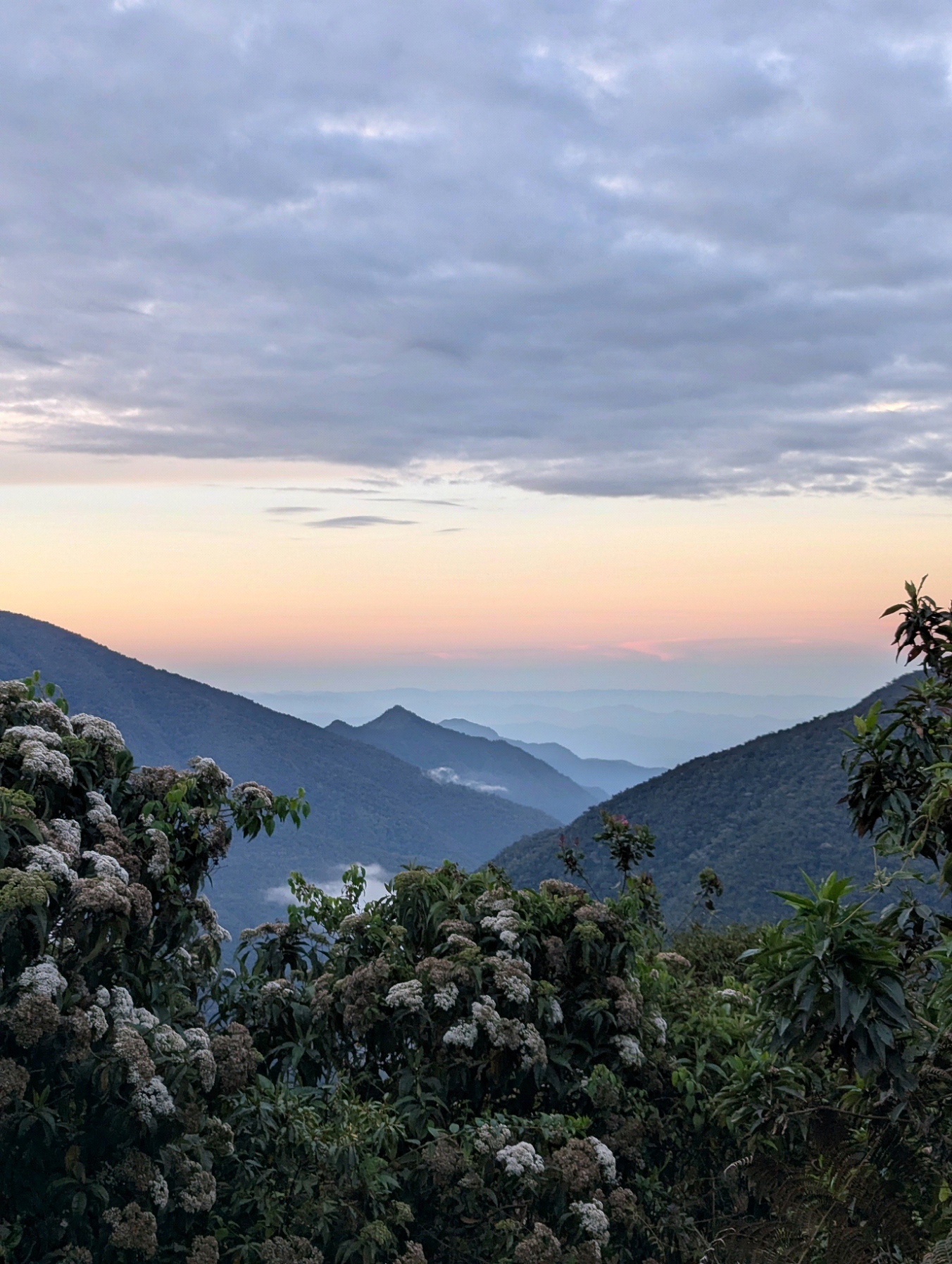
Southern Peru provides an ideal setting for this. The region spans an extraordinary ecological gradient, from Amazonian lowland rainforest to high Andean ecosystems approaching 5,000 metres above sea level. These connected landscapes store vast amounts of carbon, support exceptional biodiversity, and play a vital role in regulating water systems across the Amazon Basin through atmospheric “flying rivers”.
At the same time, deforestation and ecosystem degradation in the upper Andes continue to affect both local communities and downstream ecosystems. Over the past five years, ACCA has worked closely with communities in the Cusco region to restore degraded forests and wetlands, with a particular focus on water security and ecosystem recovery. While early results are promising, there is still limited scientific evidence on how restoration affects biodiversity, hydrology, and livelihoods across such interconnected landscapes.
Travelling across the gradient
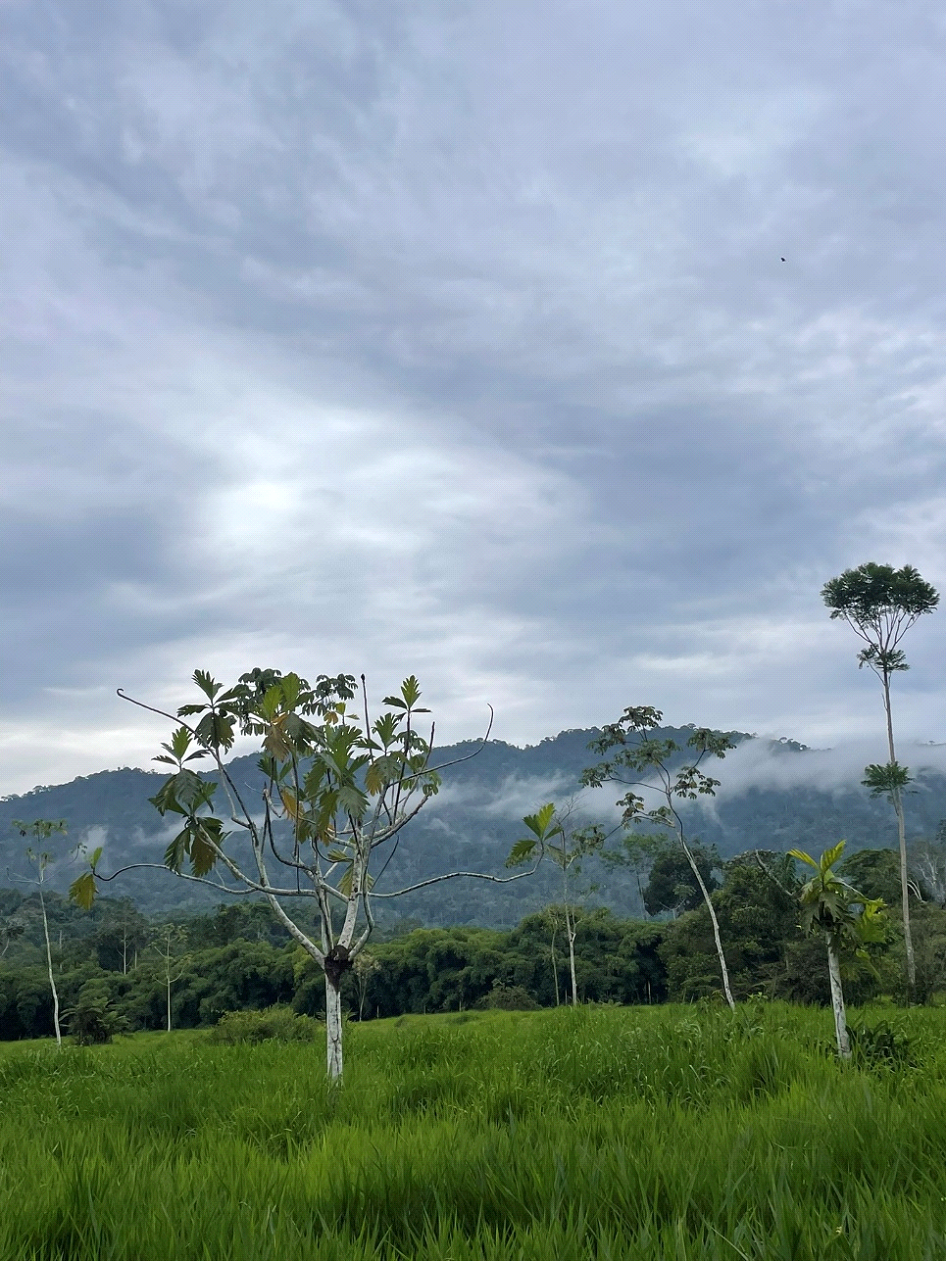
Over several days, we travelled across the full 4,500-metre gradient – from the humid lowland Amazon rainforest at Manu Biological Station to high Andean landscapes near Ausangate approaching 5,000 metres above sea level. The speed and scale of ecological change across this distance is striking.
We stayed at ACCA’s biological stations at Wayqecha, in the cloud forest, and ManuBio, in the Amazonian lowlands, both of which serve as important hubs for research and conservation across the Andes-Amazon transition.
The journey itself revealed the extraordinary biodiversity of the region. Descending from Wayqecha towards Manu, the road was alive with birdlife, including sightings of the crested quetzal, the elusive lyre-tailed nightjar, and Peru’s iconic cock-of-the-rock.
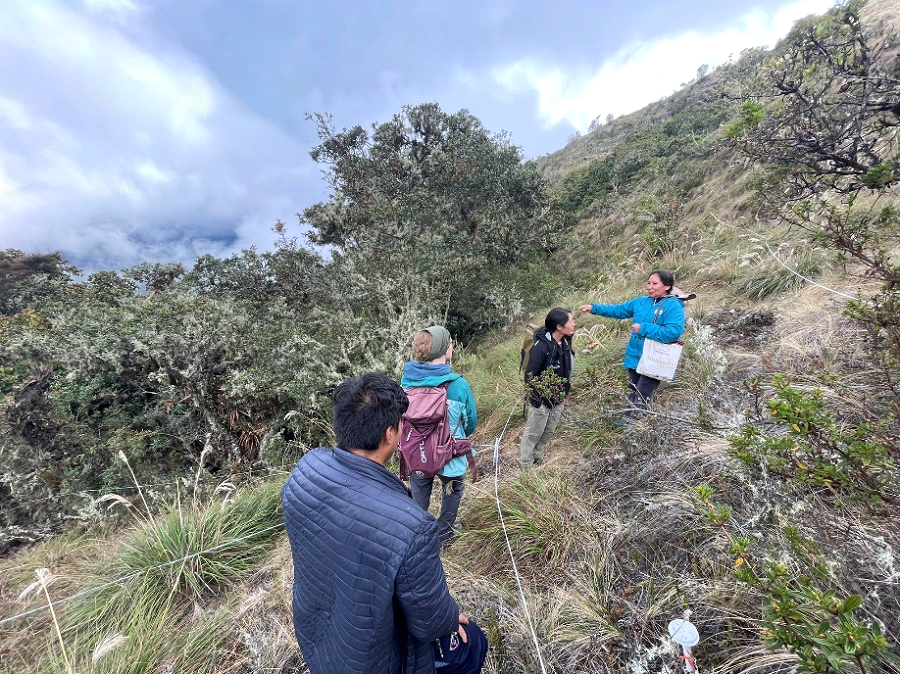
Further upslope, restoration sites in the Challabamba district and the Ausangate Conservation Area, supported by JFF’s partner, the Andes Amazon Fund, highlighted a very different landscape of high-altitude wetlands, grasslands, glaciers, and grazing areas for alpacas, llamas, and wild vicuña.
Across these sites, restoration strategies differ according to local ecological and community priorities. In the high Andes, restoration focuses on wetlands and forests that regulate water availability for agriculture and grazing. Around Wayqecha, efforts aim to improve habitat connectivity and support treeline recovery. In Manu, restoration work includes reforesting degraded agricultural land.
What became clear throughout the trip was the strength of ACCA’s long-term relationships with communities and the depth of practical knowledge built through years of implementation and experimentation. Restoration here is highly adaptive, shaped by local priorities and continuous learning about which approaches and native species are most effective under different conditions.
Alongside this field expertise, we also saw the scientific infrastructure that could help answer some of the larger outstanding questions. At ManuBio, we visited a newly established genomics laboratory, while across the gradient researchers are already monitoring biodiversity and climate impacts, including changes in insect populations that are critical to ecosystem functioning.
Bringing together ACCA’s field expertise with scientific input from Imperial College London offers a clear opportunity: to build a stronger evidence base for restoration, and to better understand how these efforts support both ecosystems and people.
The visit ultimately reinforced the value of partnership-driven approaches. ACCA brings deep local relationships, restoration experience, and long-term presence in the landscape. Imperial College contributes scientific expertise and research capacity. Together, this creates the foundation for a new collaborative project designed to better monitor restoration outcomes across the Andes-Amazon region and help address a critical evidence gap in restoration science.
We are excited to be working with ACCA and Imperial College to support and better understand this important work.